

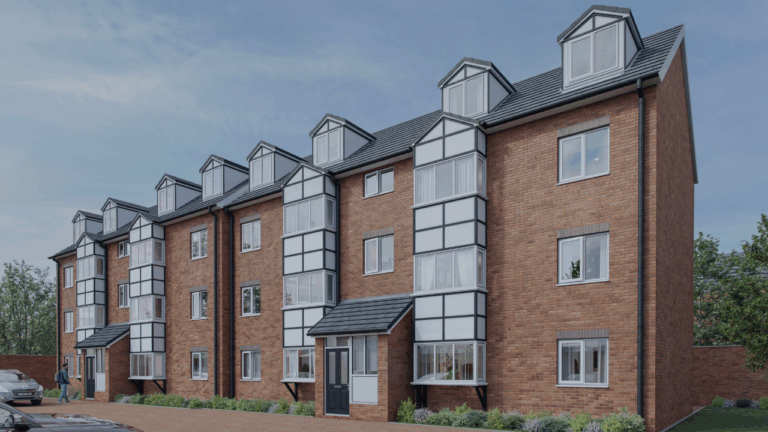
Understanding and maximising GDV is one of the most powerful levers a developer has. Yet too often it is treated as a static number rather than a dynamic target you actively shape. This post will walk through what GDV is, why it matters for your appraisal, and then move into six strategic areas you can influence from site acquisition through to exit. If you are working on apartment developments (rather than houses) this is especially relevant.
What is GDV and Why Does It Matter?
GDV stands for Gross Development Value. It refers to the total market value of a development once it is completed, sold or leased. In residential projects it is typically the sum of the expected sales of all units.
GDV is the foundation of any development appraisal — all major costs, land acquisition, build cost, and profit assumptions rest on it.
In simple formula-terms:
Profit = GDV minus costs (land cost + construction + fees + finance + other costs).
Why it matters:
- Lenders and equity partners look at GDV to judge viability and risk.
- Sizing your land budget, your build cost contingency and exit strategy all depend on GDV being realistic.
- If you underestimate GDV you lose opportunity; if you over-inflate it you expose yourself to risk.
Six Strategic Levers to Maximise GDV for Apartment Developments
Here are six areas where you can meaningfully increase GDV or protect it from erosion. Each has practical pointers.
1. Site and Location Optimisation
Location still drives value for apartments. According to the guidance on GDV estimates, location, market conditions, and property type/specification are key influencers.
What You Can Do:
- Choose sites with strong transport links, amenities, and employment hubs — these yield stronger demand and higher values.
- Consider planning potential: sites where you can increase unit yield, or secure higher-spec use, often raise GDV without proportionate cost increase.
- Avoid major constraints (e.g., difficult access, flood risk, poor daylight) which will hit value or increase costs and reduce margin.
2. Specification and Unit Mix
What you build and how you configure it impacts how much you can exit each unit for.
Practical moves:
- In city-core apartments, target efficient unit sizes (one-beds and efficient two-beds) with a design that meets renters’/buyers’ expectations.
- Include dual-aspect or externally-facing units where possible — these tend to command premium value.
- Specify finishes and amenities carefully: for example, while high-end leisure facilities may look good, a parcel room, secure bike store, and communal working space often deliver value more cost-efficiently.
- Use market data to size the mix: which unit types are most in demand in your location? Over-provide units that undersell.
3. Market Timing, Positioning and Branding
Your sales and leasing strategy affects GDV — a crowded market or a weak brand drags value.
Actions:
- Launch with strong branding and differentiation so your product stands out. Agencies have found that strategic branding and effective marketing reduce voids, drive pre-sales and “bidding” behaviour — all of which boost realised value.
- Benchmark realistic sale or lease pricing against comparable recent schemes in your target location, then apply conservative escalation where appropriate. Over-optimistic pricing can tie up stock, reduce liquidity and depress secondary value.
- Plan your sales programme so it doesn’t flood the market: a staged release can maintain demand rather than saturate it.
4. Additional Income Streams and Flexibility
GDV isn’t just about apartment sale values; it can include other value-add streams.
Consider:
- Car parking, storage units, flexible commercial space at ground level, amenity spaces that could later convert to extra units. These all potentially increase GDV.
- Designing with future flexibility: e.g., units that can convert between one-bed and studio depending on demand, or commercial shell space in the basement which could shift in use. Flexibility boosts value by reducing risk.
- Lease-back or forward-sale arrangements can sometimes improve value for investors and thus raise GDV potential.
5. Cost Control and Programme Certainty
You must protect GDV from being eaten away by cost overruns, delays or defects.
Key safeguards:
- Build in conservatism for build cost inflation, programme delays and finance costs. GDV may be robust, but if costs creep, your margin disappears.
- Secure contractors early, lock pricing where practical, and tie contractor payments and milestones to performance.
- Ensure compliance risks (fire safety, building regs, Part O, etc) are handled early so you don’t incur late-stage cost or programme delays.
- Monitor site progress tightly; every week of delay reduces the net present value of cash flows, which in turn can suppress perceived GDV for lenders.
6. Exit Strategy and Market Liquidity
At the end you must realise the GDV you’ve forecast — either via sale, letting (for BTR), or refinance.
Important to nail this:
- For apartment schemes where units are sold, show comparables for recent sales and market outlook for your locale. A GDV based on an unrealistic value is a red flag.
- For BTR models where the exit may be a portfolio sale or refinance, make sure rental assumptions and operating cost assumptions support the value you build in.
- Make sure your exit benchmark is credible: lenders will stress test assuming conservatism in both value and cost. There is commentary that lenders increasingly scrutinise GDV modelling. Clever Lending
Bringing It All Together: A Development-Appraisal Checklist
Below is a checklist you can use at the appraisal stage:
- Estimate GDV based on comparable sales/leases; include secondary income streams (parking/storage/commercial).
- Model a conservative and an optimistic scenario (to stress test) — account for cost escalation, possible downward value movement.
- From GDV subtract all costs (land, build, fees, sales/marketing, finance) to test margin.
- Align your sales/letting strategy and branding to realise the value you’ve assumed.
- Monitor programme and delivery risks, link your contractor and supply strategy to timeline certainty.
- Keep track of market conditions and be prepared to adjust unit numbers or product type as market shifts.
- Review and update your GDV assumptions at key milestones (planning approval, pre-construction, 50% completion).
Final Thoughts
Maximising GDV isn’t about guesswork or hoping for perfect market conditions. It’s about taking control of the variables you can influence: site selection, unit mix, specification, branding, additional income, cost control and exit strategy. If you approach your apartment scheme as “What value can I deliver and what factors increase or preserve it?” rather than “What can I hope to get?”, you will significantly strengthen your viability case and investor/funder confidence.